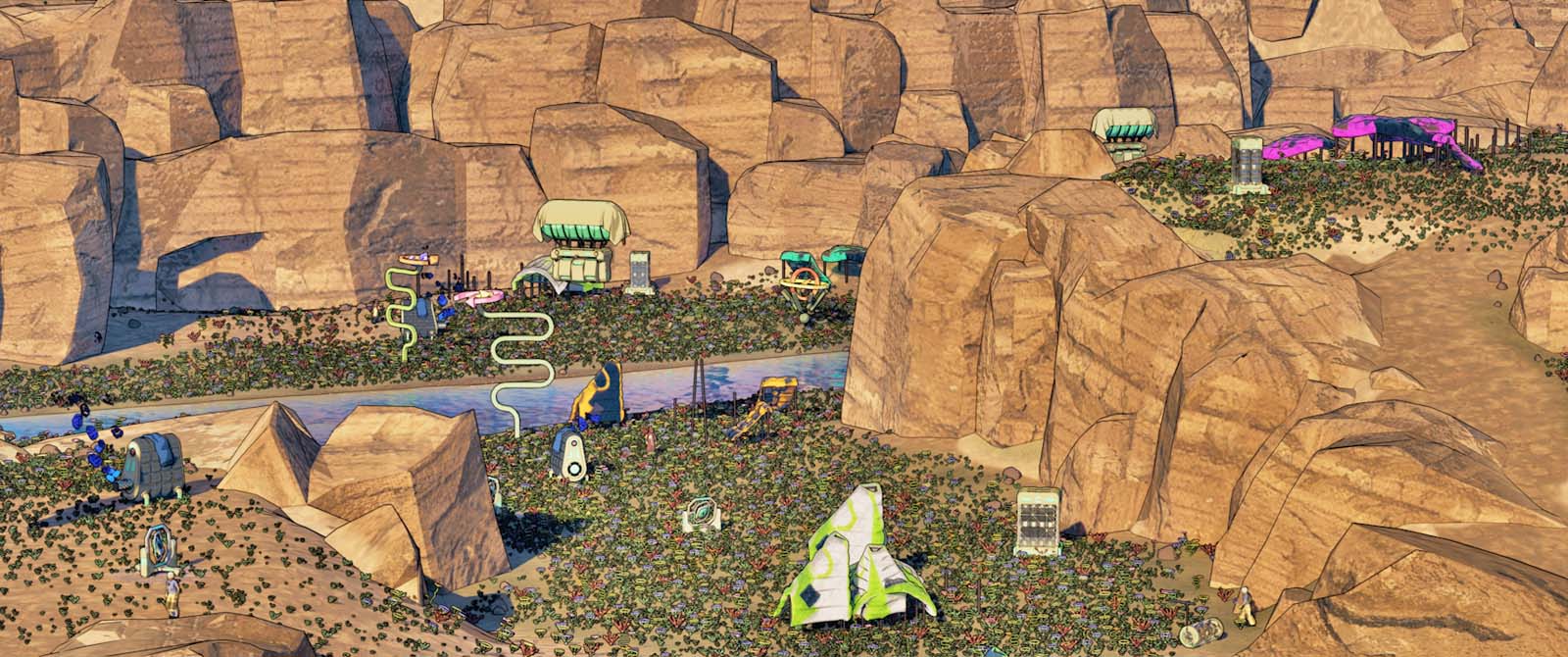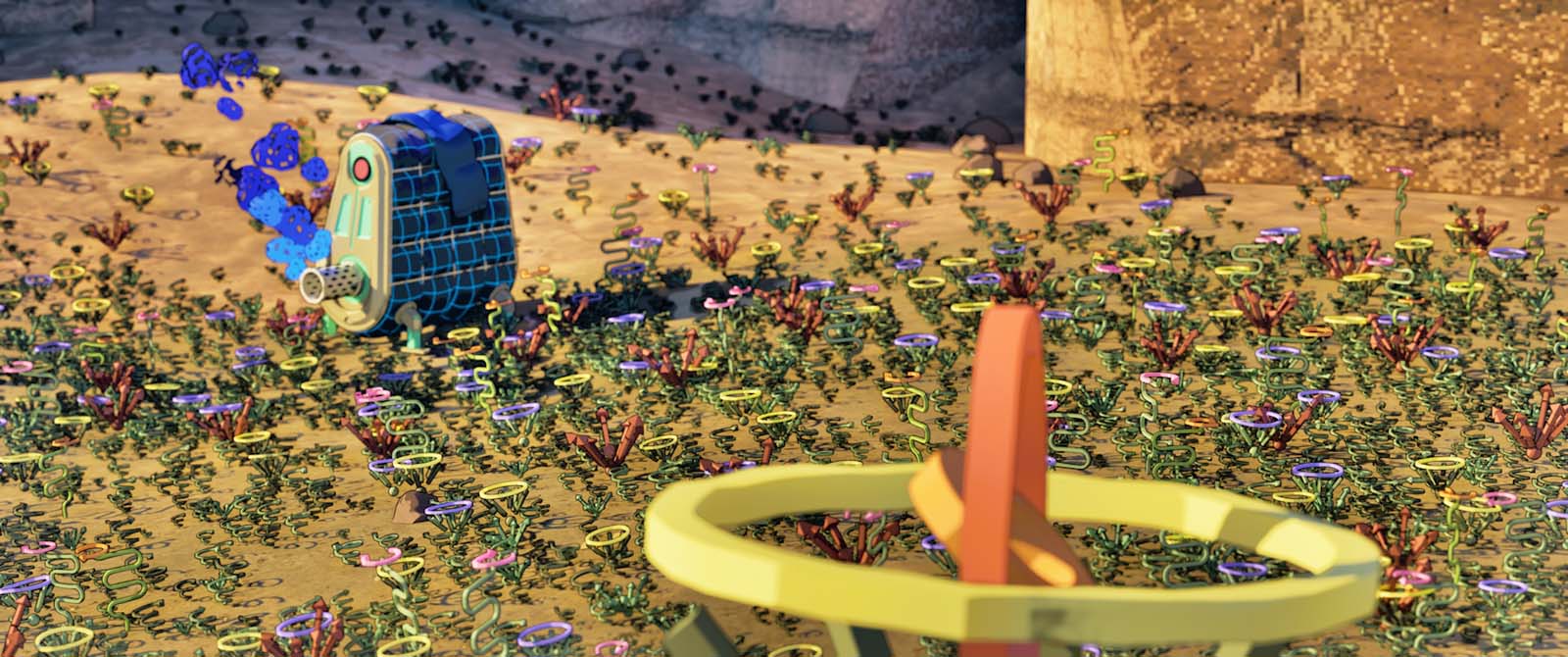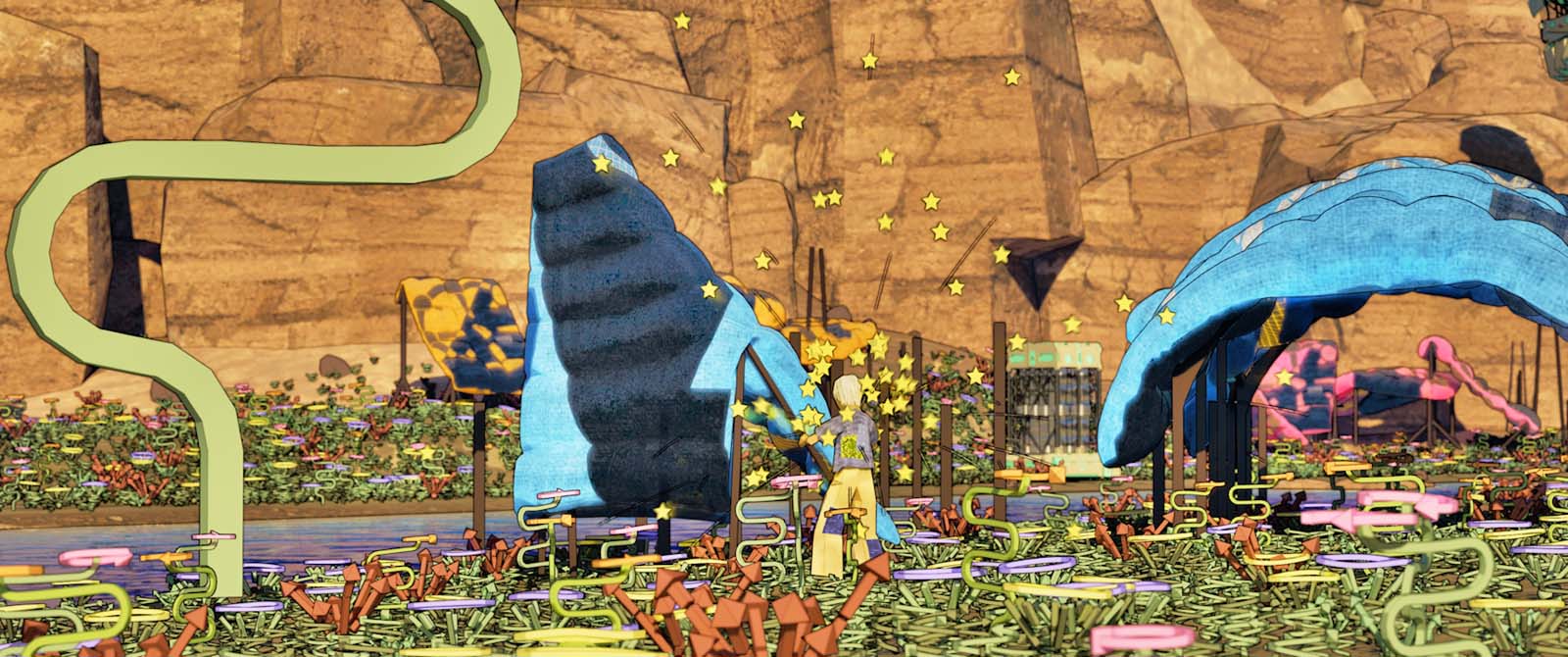
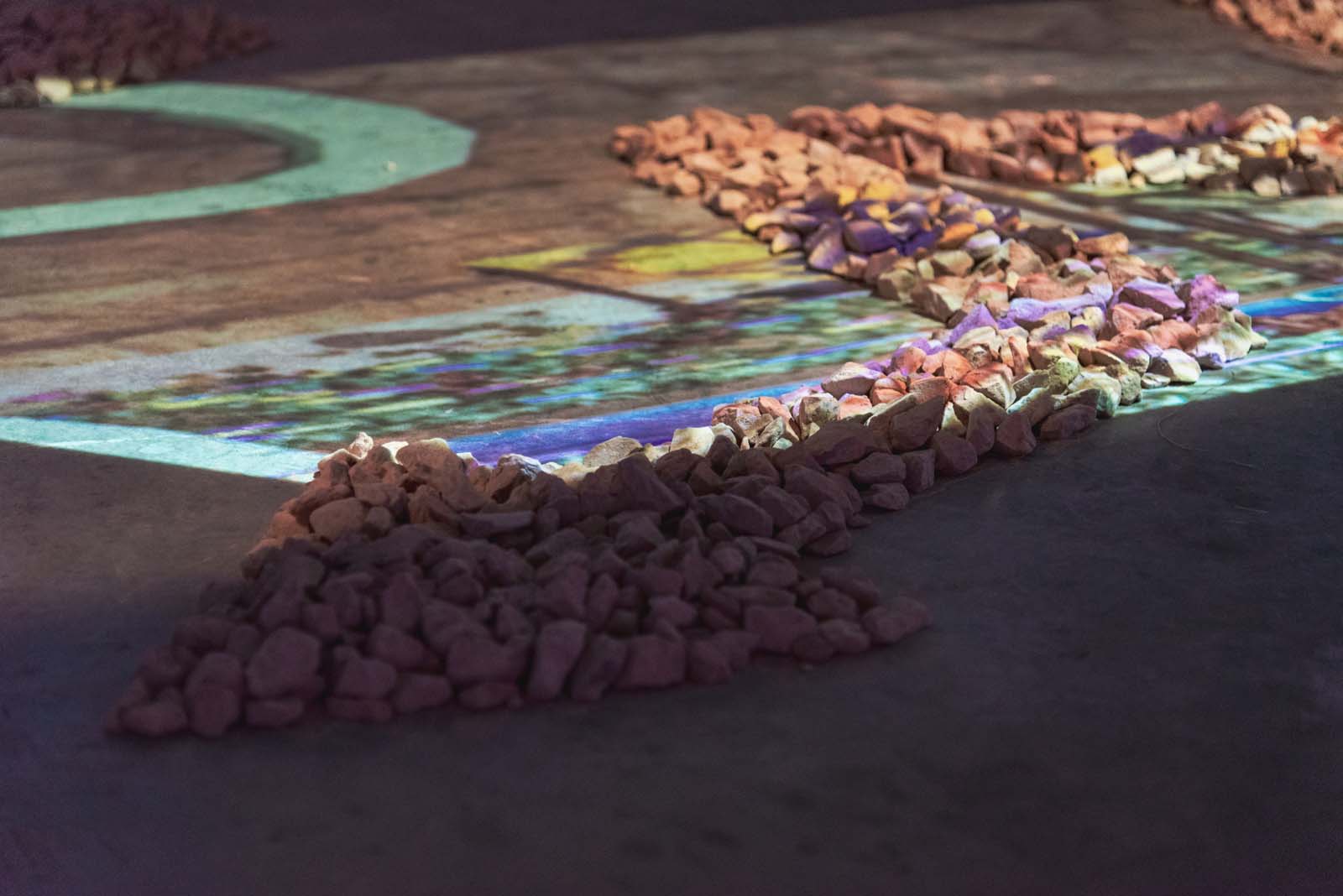

Cloud Address Earth is a speculative simulation that explores ecological, cultural, and technological futures through emergence and worldmaking. Set against the backdrop of climate-related human migration, the project follows a near-future nomadic movement taking direct action to establish a deep listening infrastructure for the natural environment. The convergence of a physical interface and a model world invites players to participate in the nomadic telos and construct decentralized infrastructure that reframes our technological relationship to the natural world.
The project focuses on a group of eight nomads who have traveled to the rugged and remote Owyhee Canyonlands of Southeast Oregon. Here, water scarcity, wildfires, and changing vegetation patterns have made the effects of climate change starkly visible. The group has come here to catalog and preserve the native ecology, adding the area to a worldwide network of deep-listening devices. They approach the river via the twisting gravel roads of Leslie Gulch, a geographic feature that acts as a key access point for the distribution and maintenance of their equipment. As the nomads’ listening devices monitor this challenging terrain, they continuously collect data on weather patterns, wildlife populations, soil composition, and other environmental factors, which is then fed to a global cloud-based repository.
Their deep-listening devices are more than just tools; they embody the nomadic telos— a desire to integrate non-human communication into a new form of planetary intelligence that transcends human-centric models of governance. The machines imagine the possibility of a “stack” that leverages our global computing infrastructure in a way that is free from political geographies and economies. Ecological deep listening serves as a critical practice of James Bridle’s proposal for a new relationship between technological entities and the earth, addressing all living beings as a part of the web of action that must take place to live within a changing climate. The project posits that nomadic living can become a generative cultural force, facilitating the development of infrastructure crucial for planetary intelligence.
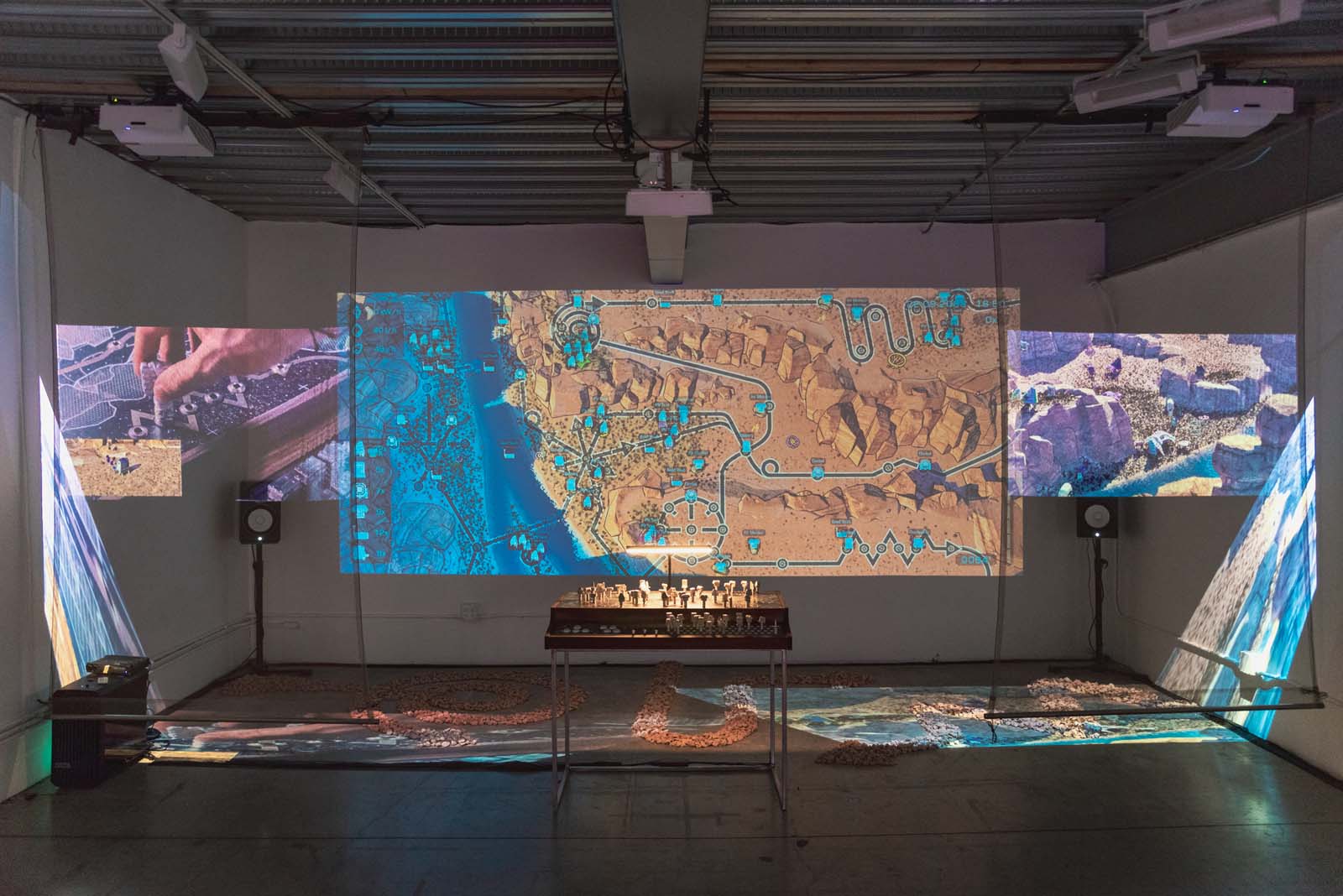
The project communicates through the medium of simulation because of its ability to condense large time spans, complex systems, and emergence into an accessible, real-time format. The custom-built controller allows players to alter the simulation and directly engage in the creation of a new ecological and cultural paradigm. This interaction between hard and soft space connects the physical and digital models, transforming the physical artifact into a precursor for architectural actuality. Both models are framed by a landscape drawing of Leslie Gulch. In this drawing, symbols of the nomadic movement are projected onto the landscape, drawing attention to the convergence of human perception with the documentation of the natural environment. Through this interface, players experience the entanglement and emergence that arises from the stack of simulated ecology, hardware, and human action.
Through a dichotomic exploration of technological agency, Cloud Address Earth invites us to reconsider the relationship between technology and the environment and participate in a new cultural force that embraces ecological deep listening. Through speculative simulation, the project envisions the coalescence of ecological awareness and sensing technology as a means to build a resilient and interconnected planetary intelligence.
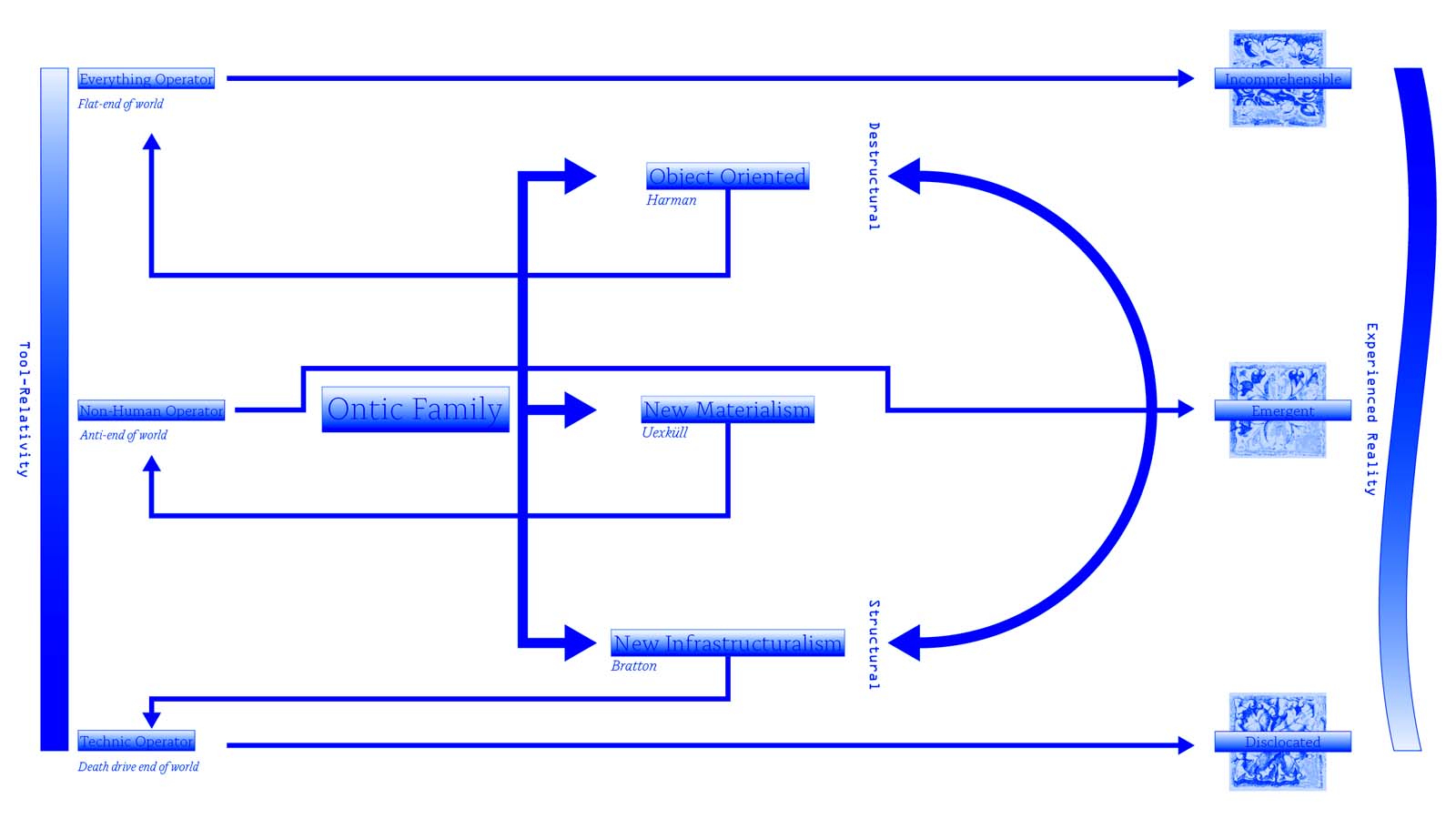
The project explores technological agency in two distinct ways. The first is through the controller,which entails the creation of an active object that provides an interface for generating emergence. The interest comes from the interface of instruments. In particular, a type of instrument that plays itself. Outputfrom these devices is not absolute, nor do their interfaces fully describe the complexity and chaos that can be generated. At best, their output can be seen as a collaboration between the platform and the spectator, the latter is the curator of emergent events. The hardware interface of the thesis serves as a platform for players to explore and create their own infrastructures within a model world and realize emergence througha dynamic representational system.
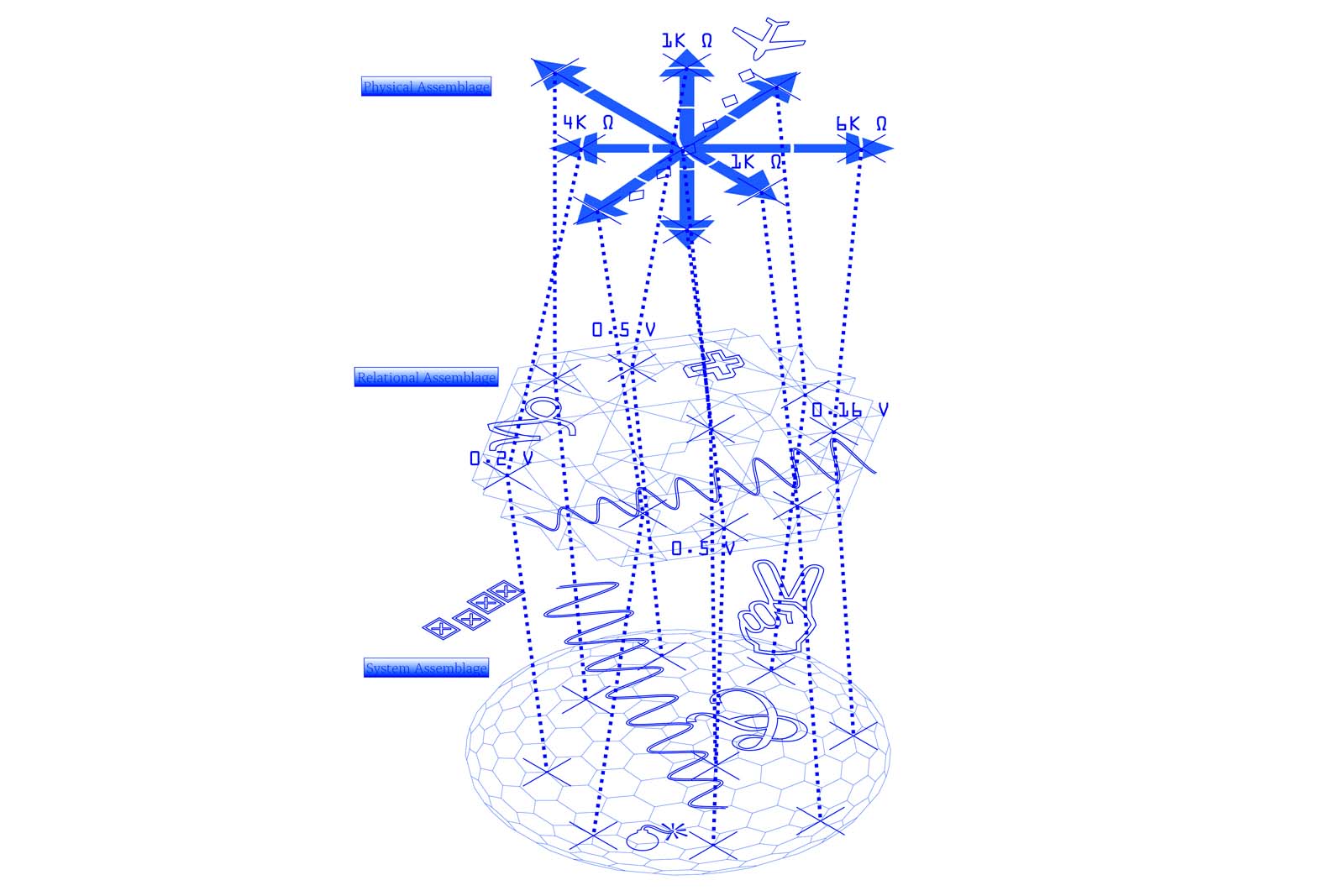
Developing the project’s own stack began with a representational imagining of connectivity between assemblages in hard space and soft space. The representation of these systems features an unseen translational layer that relays physical assemblages into digital ones. A prototype was made that could relaystate logics between a physical device and a computer.
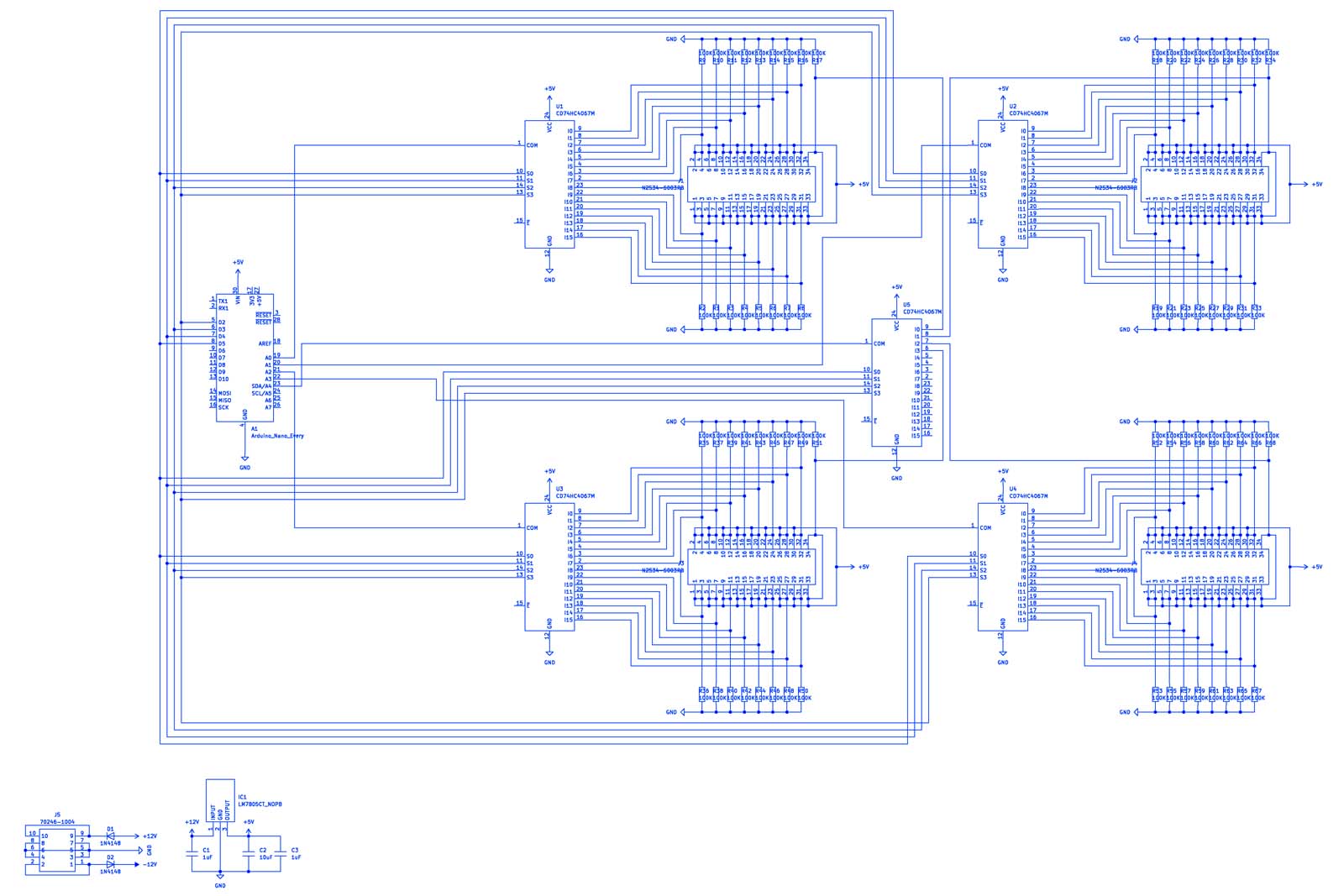
Developing circuits was an actuation of the entanglement diagrams. This process is the material embodiment of the invisible translational layer that exists within the project’s stack. The imagery produced in this process is the practical version of the entanglement diagrams that were made in the prototyping phase. They enable the hardware to capture the effect that was produced in the diagram.
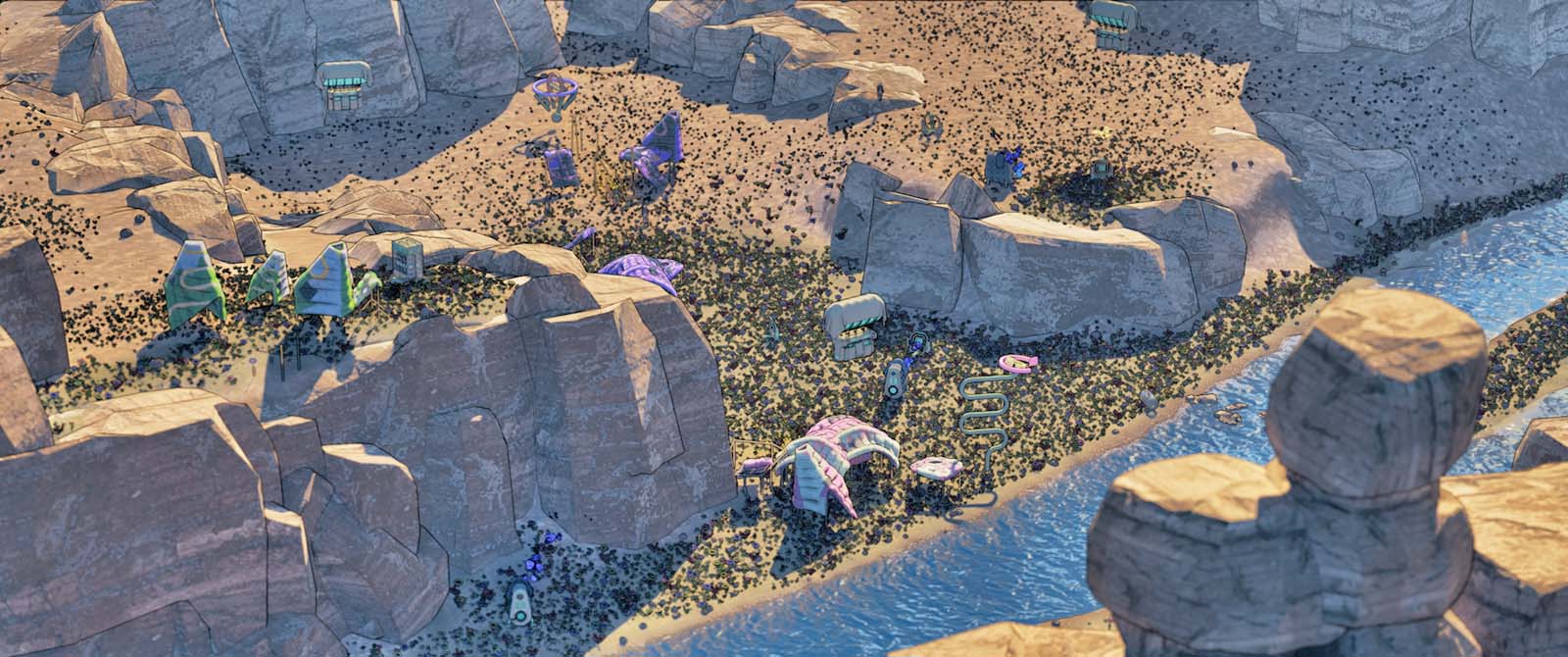
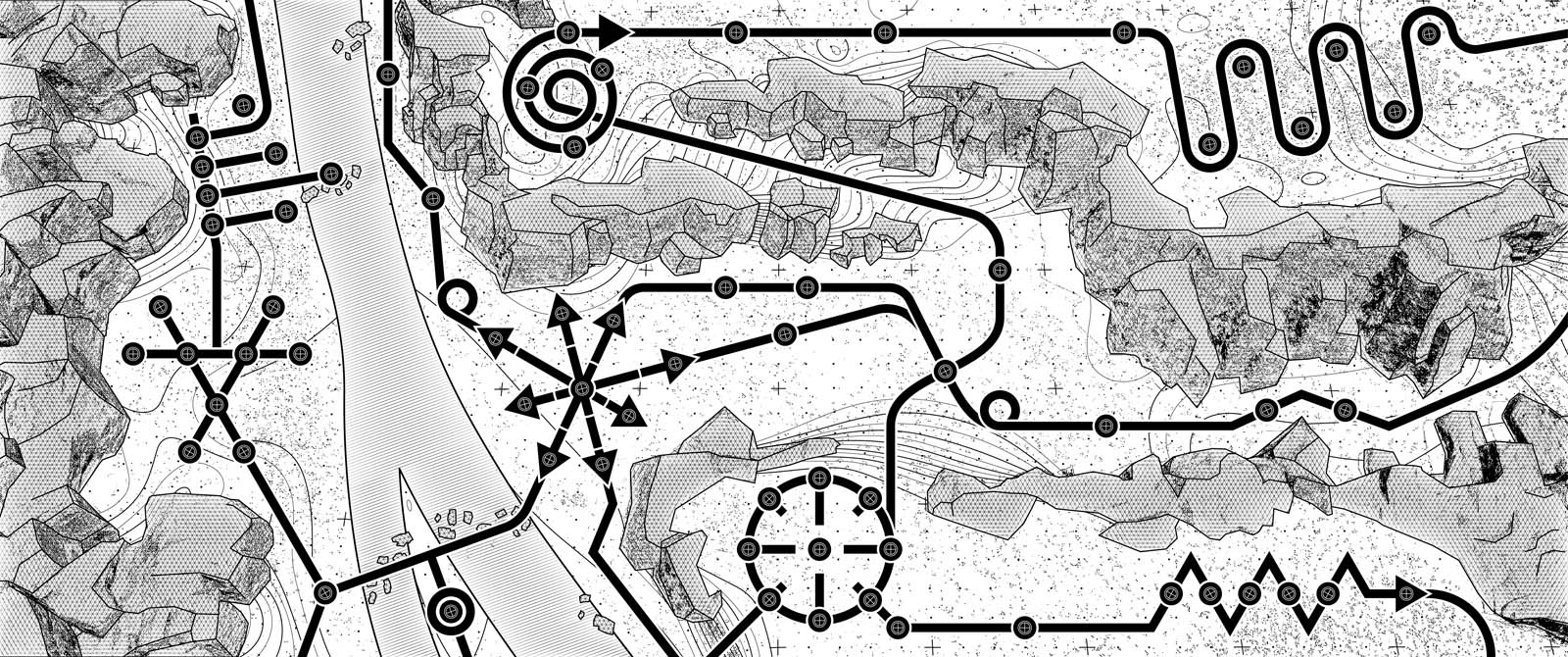
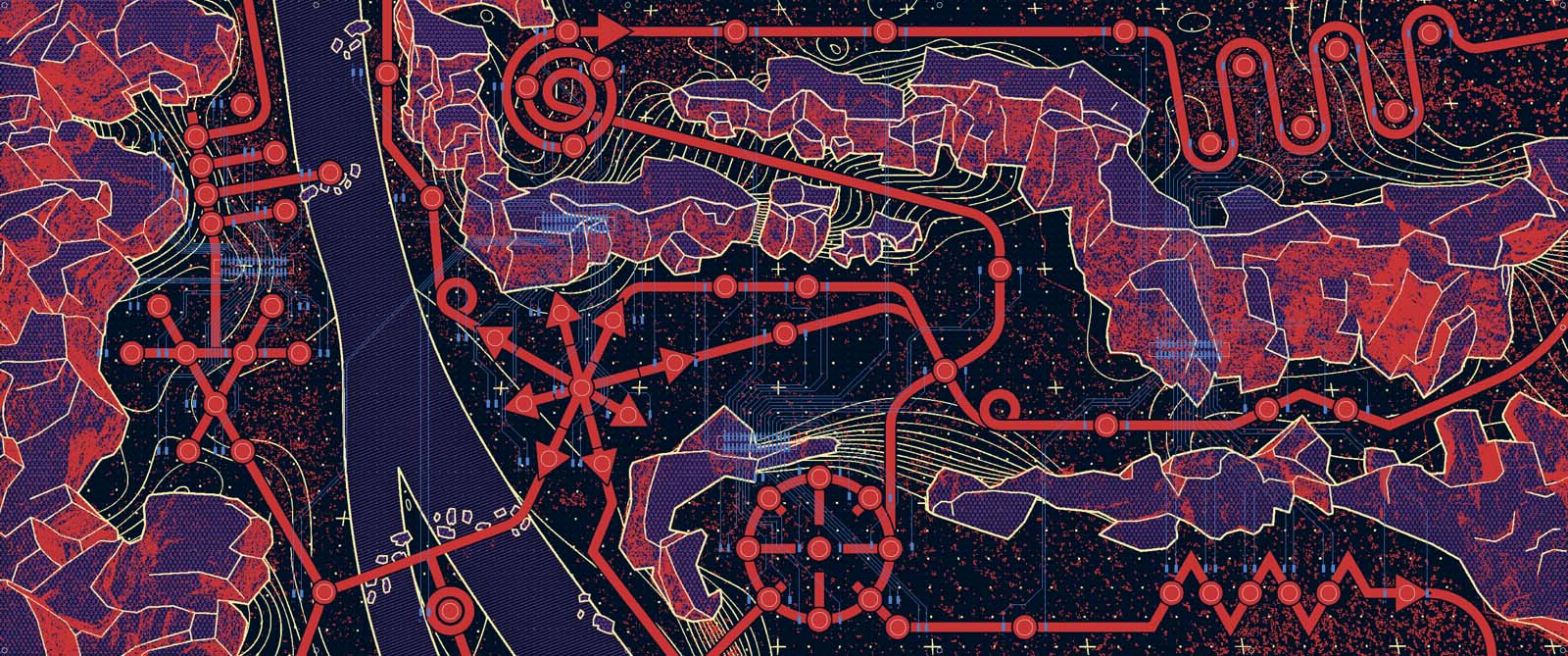
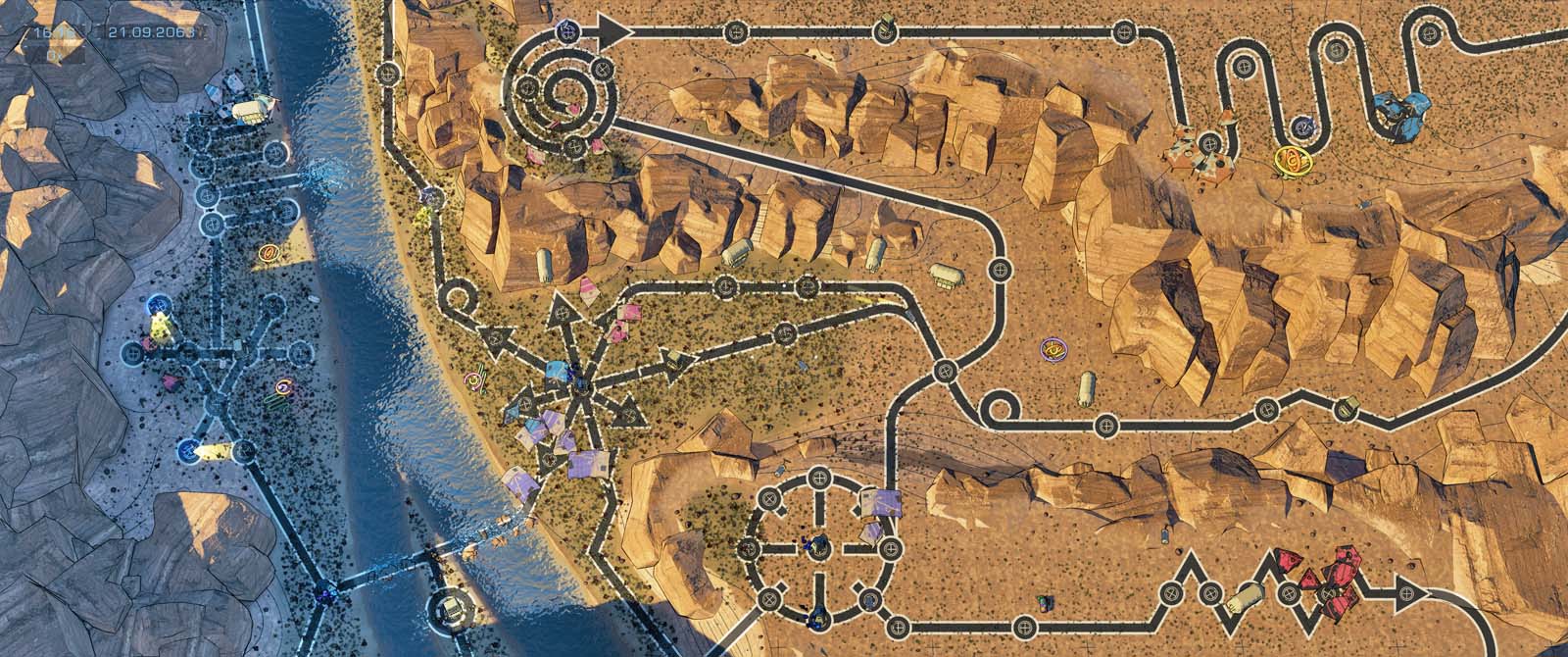
Expanding upon the prototype, the logic of the controller was applied to a map of Leslie gulch. This allows the model world to connect control points in the landscape with points in the digital space. Symbols of the nomadic movement are projected onto the landscape to serve as a visual reference point for the observer. The symbols are also reminiscent of the land art of Robert Smithson and draw attention to the convergence of human perception with the documentation of the natural environment.
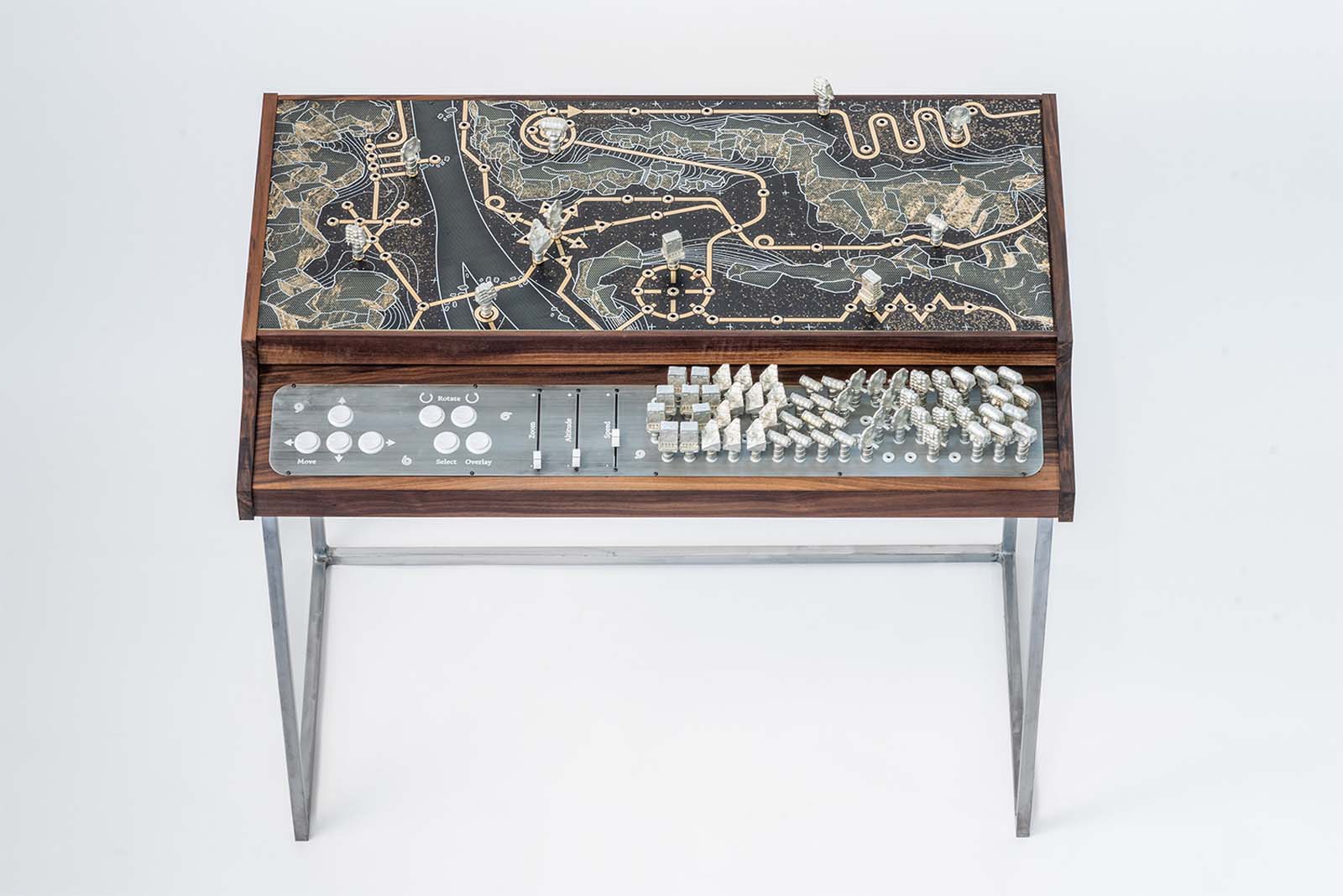
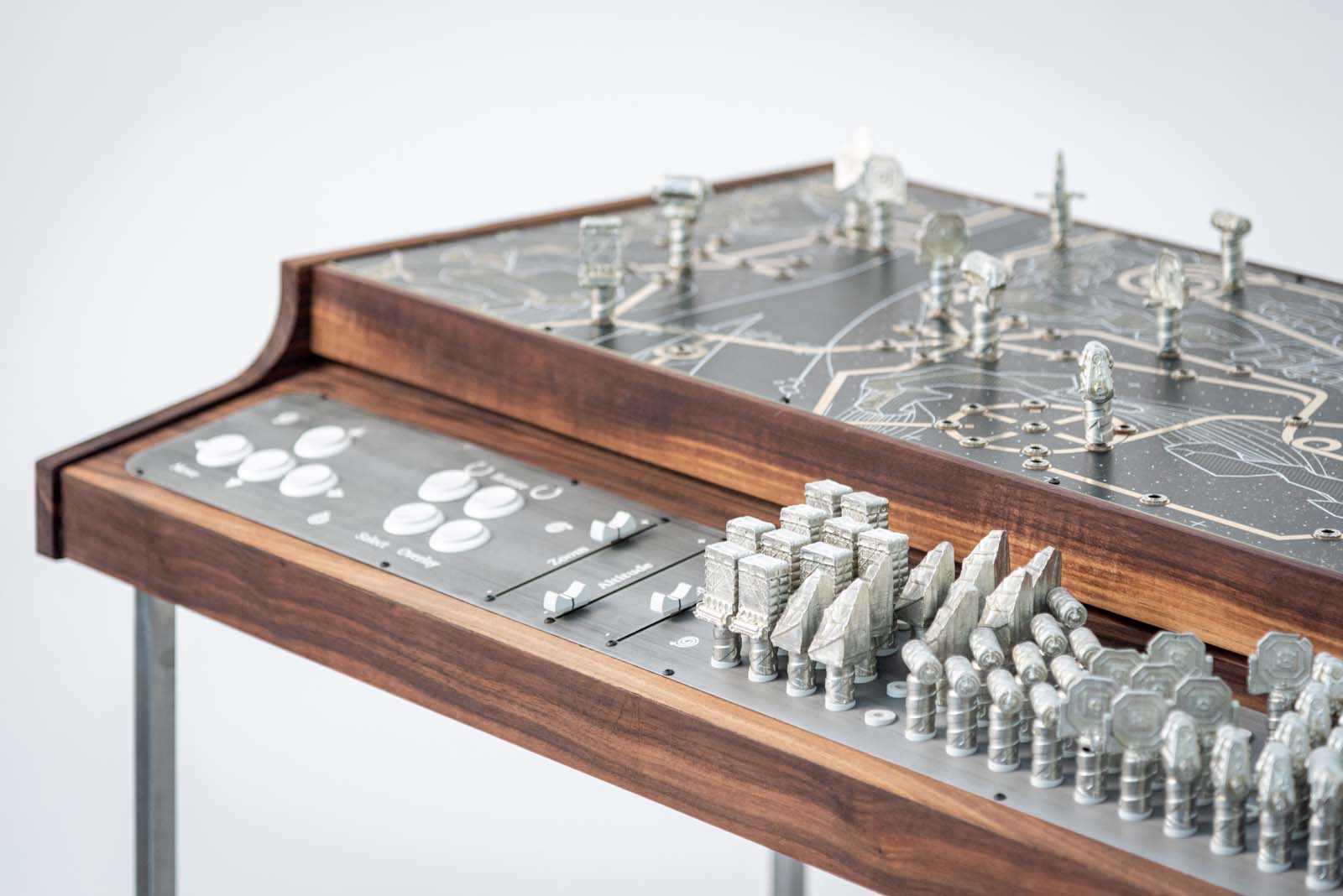
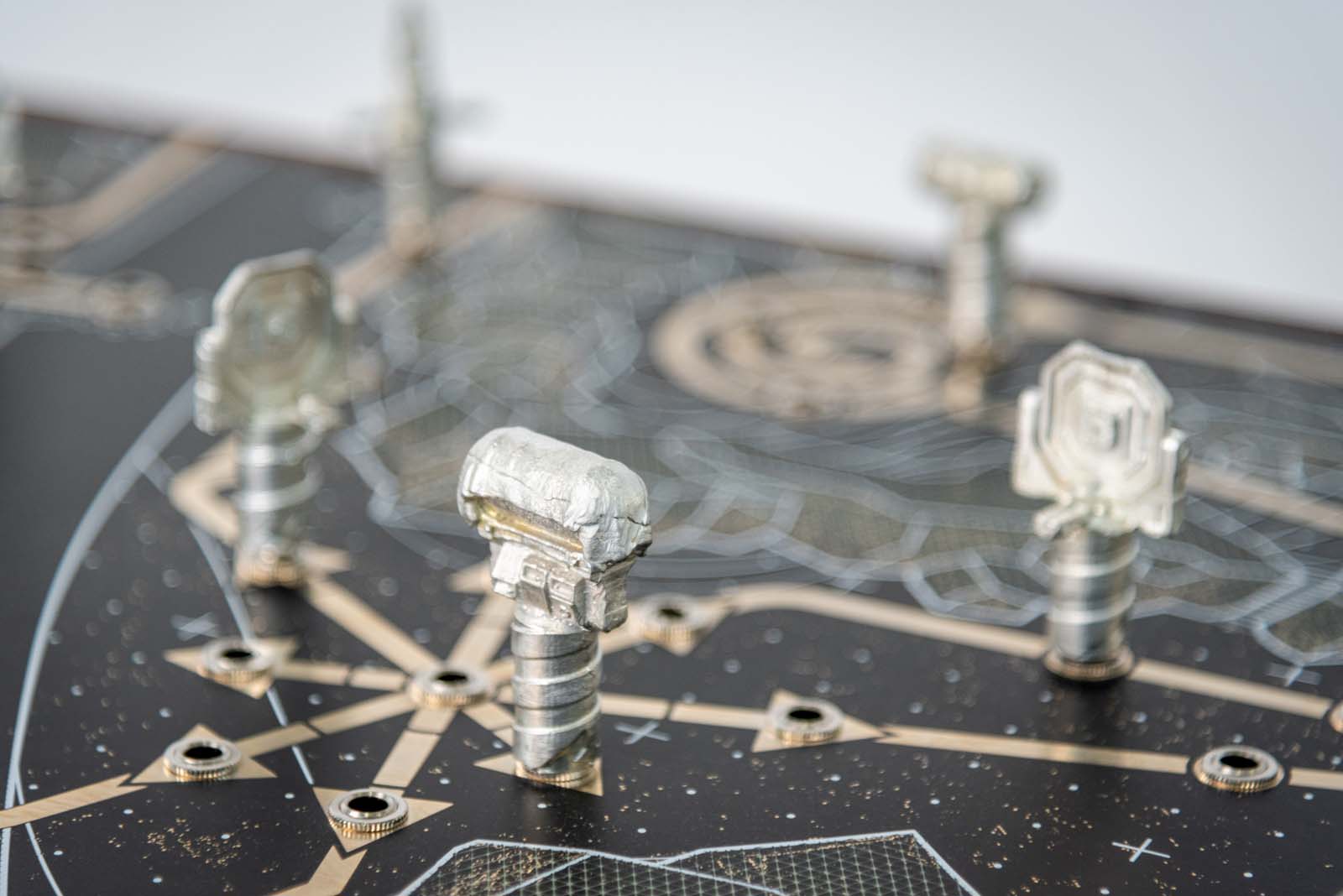
The custom-built console is the final resting point of this process, allowing the spectator to alter the simulation and directly engage in the creation of a new ecological and cultural paradigm. The interaction between hard and soft space breaks open the digital model and connects it to the material world. Through the custom hardware interface, participants experience different points of access to the simulation than they do as pure observers or with a typical game controller. The platform enables the entanglement and emergence that arises from the stack of simulated ecology, hardware, and human action.
PV Tents – The PV Tents provide shelter and energy, harnessing sunlight through photovoltaic fabric.
Gimbals – Gimbals are high-resolution surveying devices that are designed to autonomously gather data on geology, topography, and wildlife.
Air Monitors – Air Monitors survey from an aerial perspective, collecting topographic and atmospheric data from above.
Condensers – Condensers monitor local temperatures and humidity, while also functioning as vital water resources in arid environments.
Seed Vaults – Seed Vaults are mobile storage units that traverse the environment, collecting seeds and organic material to preserve biodiversity.
Batteries – Batteries are central energy hubs, drawing power from PV tents and storing it for use during periods of low sunlight.